

The Idol of Activity
When busyness becomes a false god and how to reclaim the life we keep sacrificing to it.
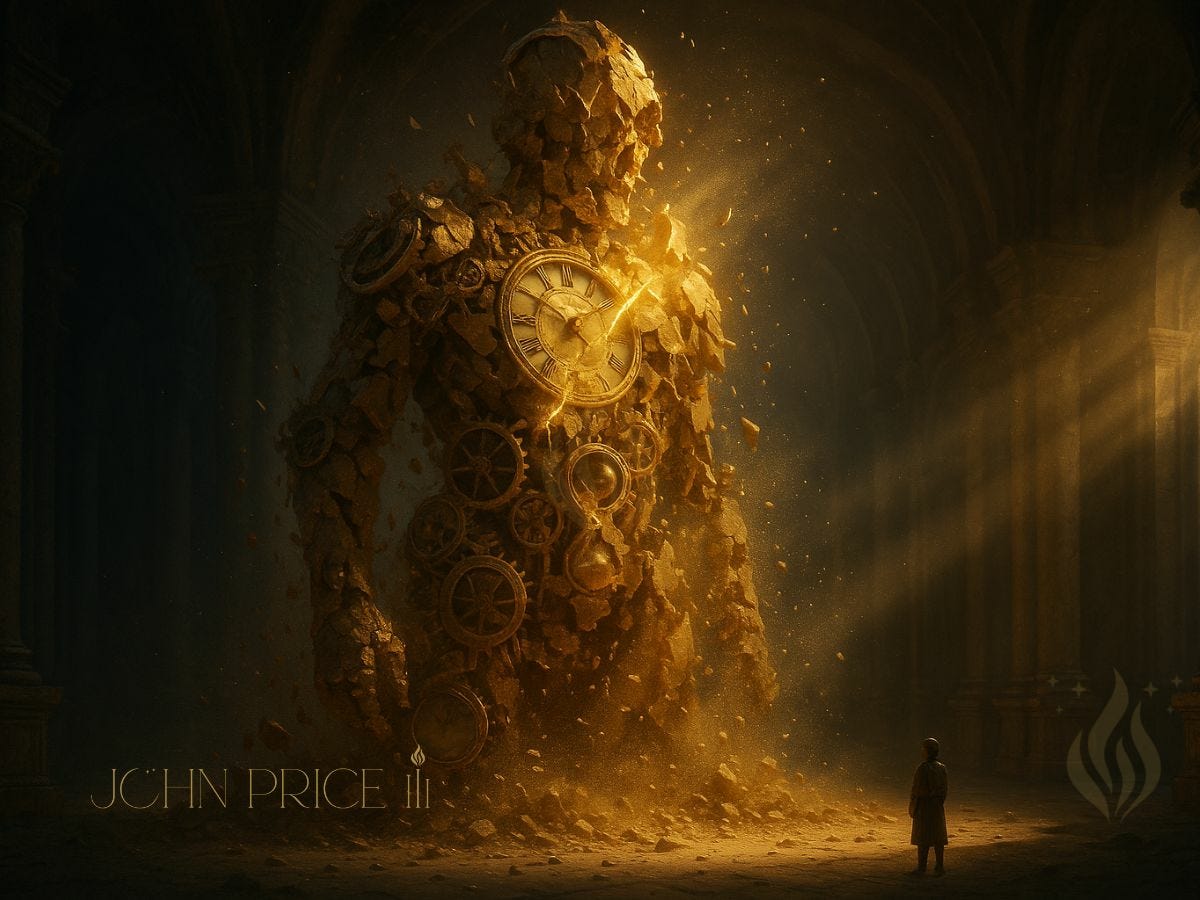
There is a belief system, a social construct, that many of us were born into without ever consciously agreeing to follow. It shapes our days, defines our worth, fuels our judgments of others, and directs our devotion. It is not tied to any temple, scripture, or religion, yet it is woven into modern life so thoroughly that it often feels like truth.
It is the worship of activity.
Of course, we do not it worship.
Instead, we call it movement, accomplishment, productivity, achievement, “earning our keep,” hustle, ambition, busy…and let’s be honest, the list of terms and phrases stretches on and on.
We’ve internalized the belief that a full life must be a fast life.
That somehow, the idea that the more we do, the more we are.
Activity is praised, admired, and expected. It becomes the altar where we place our self-worth. Where we will sacrifice our well-being, often without questioning whether Activity deserves such power.
Entire industries profit from our burnout, selling us planners, apps, systems, courses, and mantras that reinforce the illusion that relentless motion equals meaning.
These expectations echoes through the halls of corporate culture, family patterns, social media narratives, and educational systems.
The doctrine is simple: do more, achieve more, move faster, stay ahead…and always, always, always, compare yourself to someone else who has more, done better, is more successful, so that you are motivated to keep offering yourself at the idol’s feet, and wallow about how you’re ‘not there yet’.
Hustle is glorified.
Burnout is called commitment.
Exhaustion is reframed as resilience.
Achievement becomes a moral compass.
We have built a society upon this altar of doing, and many of us have been taught to sacrifice ourselves in its name to avoid being shamed or seen as disappointing. We learn to measure worth through output and devotion to this idol.
The message is clear: the busier we are, the more valuable we appear.
Those who do not conform to this fervent worship, the consequences arrive quickly and brutally.
We shame those who rest, as if stillness is a sin.
Stopping feels suspicious.
Rest becomes rebellion.
Slowness is interpreted as laziness.
The moment we slow down, the shadow of shame creeps in.
The deeper truth is that this idol thrives on discontent. If we felt rooted in our lives, connected to our people, and at peace with ourselves and our path, we would no longer need an endless list of tasks to feel valuable.
The Idol of Activity grows strongest in the places where we feel insecure, restless, or untethered.
Activity as Avoidance
The Idol of Activity does not only hold cultural power. It holds personal power as well.
Accomplishment can become armor. Productivity can become protection. Constant motion becomes a socially acceptable way to avoid truth, intimacy, and feeling.
Activity keeps us at a safe distance from ourselves.
We stay in motion to avoid the discomfort of stillness.
We pack our calendars so we never have to touch our grief.
We stay late at work so we do not have to confront loneliness.
We chase accomplishment so we do not have to question our worth.
We fill our days so emptiness never has a chance to speak.
We keep relationships shallow because depth requires presence.
We take pride in exhaustion because it distracts us from the parts of our lives that need attention.
Activity becomes the perfect numbing agent.
It is not as obvious as alcohol, not as taboo as addiction, and it can be just as effective at keeping us far from our own truth.
The world does not question this avoidance. It rewards it. We receive admiration for running ourselves into the ground. Few people pause long enough to ask what we are truly running from.
It is socially acceptable self-abandonment.
Activity as Addiction
There is a reason stillness feels uncomfortable.
Activity provides quick hits of dopamine. Completing a task offers a surge of satisfaction. Crossing something off a list creates a brief sense of control. Rushing brings adrenaline that mimics purpose.
The cycle mirrors addiction. When we stop, the withdrawal arrives.
Restlessness.
Guilt.
Agitation.
Self-judgment.
The mind spins, or a quiet panic sets in because nothing is happening.
Productivity becomes the drug we are praised for taking. Slowing down becomes the withdrawal we fear. This is not motivation. This is dependency. An addiction wrapped in accolades.
Modern life intensifies the cycle. The constant context-switching of our days—the attempt to multitask, respond instantly, and stay reachable at all times—fractures the mind and splinters focus until the nervous system hums with static. The expectation of continual availability becomes a quiet violence, a form of self-erosion that feels normal only because everyone else is doing the same.
Our sleep suffers.
Our nourishment fades.
Our bodies contract.
Our intimacy withdraws.
Our rest is neglected.
Our inner world becomes a ghost town.
We grow so busy doing that we forget how to live, sacrificing the very body meant to carry us through.
This is not productivity.
This is performance.
This is sacrifice in the name of worship.
The Light of Activity: Sovereign Devotion
Here is the truth your nervous system already knows: activity itself is not the enemy. There is a version of doing that expands rather than depletes. Purposeful action can nourish. Accomplishment can support our values instead of masking our wounds. We are designed for movement, for growth, and for inhabiting our lives with intention.
The invitation is to shift the narrative. Activity can become a powerful tool—not something we worship, but something that serves us. It can help us honor our values, support our humanity instead of consuming it, and create space instead of swallowing it.
There is a form of accomplishment that is not sacrifice.
A form of productivity that is not avoidance.
A form of structure that is truly compassionate.
Healthy structure can become an act of care. Time management can become an act of sovereignty. Prioritization can become an act of clarity. Rest can become an honored part of the cycle rather than an afterthought.
Life opens when we:
budget our time without budgeting our worth
create priorities that reflect our values
break tasks into small, steady habits
choose meaningful actions over performative ones
give ourselves permission to complete what matters and release what does not
protect space on the calendar with intention
honor the nervous system as part of the process
Structure becomes supportive instead of restrictive when it honors our humanity.
This is not rebellion.
This is sovereignty.
The moment structure supports your nervous system, it becomes sacred.
The moment accomplishment flows from integrity, it becomes freedom.
The moment activity becomes a choice instead of a compulsion, you reclaim the altar from the idol and return it to yourself.
This is accomplishment rooted in sovereignty, not avoidance.
This is activity born from alignment rather than fear.
The Antidote to the Idol
At the heart of all this doing, striving, hustling, and proving is the quiet, unspoken ache of discontent. The Idol of Activity thrives in the belief that this moment, this life, this version of ourselves is not enough. The whisper beneath the motion says, “Who I am, what I have, where I am… is not enough.”
Presence dissolves this belief and brings us back into our bodies.
Gratitude softens the idol’s pull and brings us back into relationship with our lives.
Contentment interrupts the narrative that we must chase a future in order to escape the present. It invites us to notice what already carries beauty, meaning, and enoughness.
When we are content—deeply, soulfully content—the compulsion to outrun becomes unnecessary.
This is not complacency. It is the practice of inhabiting life rather than escaping it.
A person rooted in contentment does not stop growing. They simply stop running. They stop worshipping movement. They stop offering their well-being at the altar of “more.” They stop confusing momentum with meaning.
This is not an argument against achievement. It is an invitation to be at peace with what is.
Activity becomes optional instead of compulsive.
Accomplishment becomes aligned instead of addictive.
Doing becomes a natural extension of being rather than a substitute for it.
Life becomes enough.
We become enough.
This moment becomes enough.
The Idol of Activity loses power when we reclaim our presence.
The Reclaiming of Aliveness
The great unlearning of our time is this: we must take our devotion back from the Idol of Activity and return it to the Self.
Not the self who performs, but the self who lives.
This matters because the Idol of Activity will always demand more—more hours, more output, more sacrifice, more proving. Its appetite is endless. The moment we stop worshipping activity is the moment we begin to live.
Life does not necessarily become easier, yet it finally becomes our own.
When we turn away from this idol, everything reorients.
The body becomes the altar.
Presence becomes the prayer.
Stillness becomes the offering.
Connection becomes the practice.
Rest becomes the sacred revolt.
Most important of all, real, grounded, embodied aliveness becomes the truest accomplishment.
Stepping away from the worship of activity brings us back into our own humanity. We remember what it feels like to inhabit ourselves again, to live from the inside rather than through performance or proving.
The invitation is simple: return devotion to the only place it truly belongs.
Return it to yourself, to this moment, to the life you are already living.
The moment activity becomes a choice rather than a compulsion is the moment you reclaim your own inner altar and step back into sovereignty.
It is the moment you begin living as a sovereign being—moving intentionally, breathing deeply, and finally coming home to the self you were always meant to inhabit.
Reflection Prompts
Where have you been worshiping activity without realizing it?
What emotions or truths have you been avoiding by staying busy?
What fears arise when you consider slowing down?
What might devotion to yourself look like instead of devotion to busyness?
I’d love to hear what this brought up for you.
Your reflections are part of the medicine, and every voice adds to the remembering of our collective sovereignty.
If this reflection stirred something within you, consider sharing it with someone who’s walking their own path of becoming. The ripples begin when we share the light we’ve found.
If you’re new here, welcome. I started Reflections from the Temple to be a space for those returning to their center — one breath, one truth, one remembrance at a time. Subscribe to receive each new reflection directly in your inbox.